For most of this week the weather has made it difficult to look for butterflies. Thick fog, like pea soup, covers most of our area for 90% of the days. It rains every day, but usually for a short time, making the forest trails too slippery to travel on. Instead we take trips into local villages or walk to waterfalls.
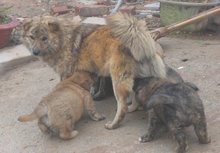
I have been taking many photos of the dogs of Tam Dao. It is difficult for me to understand which ones are for food and which are pets.
I am not sure if I have seen a house without a dog hanging around the front. Dogs are everywhere--they bark at you, and follow you for a few feet, but none attack or growl.
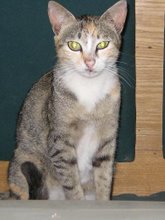
I do not believe most are treated like what we call a "pet." They seem fed enough, and relatively healthy, but most will not come up to me for petting, even when I call them. There are fewer cats around, and all but "my buddy" in the internet cafe run from me as soon as I look at them. I am sad to say that the Vietnamese do eat cat, too. However, the people of Tam Dao are, for the most part, very poor and thin--I have not seen one overweight person here.
Vietnam is a very safe place. I can pretty much travel anywhere I want without fear of being mugged or bothered in any way. The people here work very hard and take care of one another.
Today's quiz also provides a prize to the first two people who answer all three questions correctly:
1. List the three countries that Vietnam borders. You must spell them correctly.
2. Are butterflies invertebrates or vertebrates? Why?
3. What is the name of the artist in Montana whose studio you will visit on our trip next week? You must spell his name correctly.
Take care! I miss all of you and can't wait to return, but I am having fun here!
Thursday, May 17, 2007

Wednesday, May 16, 2007
Greetings
Hi,
To get to the quiz, there were three correct answers, but one person didn't sign their name. The correct answer was:
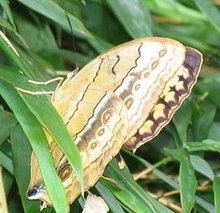
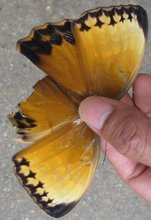
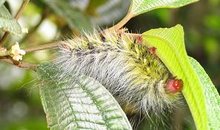
A. butterflyB. butterflyC. mothD. butterfly
I think, however, that it was really hard to tell from the small photos I posted. I can't make them larger from where I am, but I can show you much better ones when I return.
So Cade and Sierra (or Sienna, sorry I didn't look carefully--you let me know) got it right and will get an extra special present from Vietnam when I return (everyone will get something).
The duck eggs look exactly like chicken eggs but larger. The yolk is larger, too, but they taste the same.
Every morning a man on a motorcycle drives around the village with a loudspeaker blaring, saying in Vietnamese "Fresh bread, come get fresh bread." The hotel where I'm staying buys the loaves there for 20 cents a piece. They are sort of like large hotdog buns but crispy on the outside and soft on the inside.
Today I hiked up 1200 steps to a tower looking for butterflies, then back down.
New Quiz: Another prize will be rewarded to the first two people who answer all of the questions correctly. You will find the answers in your butterfly book I made, in one of the stories (you'll have to figure out which one).
1. According to the article, silk is produced mainly in China, Japan, Italy and __________.
2. One female silkworm moth may lay as many as _______ eggs.
3. Why is it difficult to raise/farm silkworms in the United States? __________________
Today we caught a HUGE butterfly called "Jungle Queen." I will try to post a photo of it.
Last night, while walking back to the hotel from the computer internet cafe, I ran into some people who were catching snakes and frogs. We did not figure out why--perhaps for food. The Vietnamese people who live in Tam Dao are generally very poor. The music teacher at the local school earns 30 dollars a month--that's one dollar a day. Most teachers in the city earn 40-50 dollars a month. There are no grocery stores here, mail is not delivered, no newspapers, and I have not seen one police person.
I enjoyed reading all of your posts about punishment at Vietnam schools. My feeling is that there is less behavior problems in Vietnam schools, but I really have no idea.
To get to the quiz, there were three correct answers, but one person didn't sign their name. The correct answer was:
A. butterflyB. butterflyC. mothD. butterfly
I think, however, that it was really hard to tell from the small photos I posted. I can't make them larger from where I am, but I can show you much better ones when I return.
So Cade and Sierra (or Sienna, sorry I didn't look carefully--you let me know) got it right and will get an extra special present from Vietnam when I return (everyone will get something).
The duck eggs look exactly like chicken eggs but larger. The yolk is larger, too, but they taste the same.
Every morning a man on a motorcycle drives around the village with a loudspeaker blaring, saying in Vietnamese "Fresh bread, come get fresh bread." The hotel where I'm staying buys the loaves there for 20 cents a piece. They are sort of like large hotdog buns but crispy on the outside and soft on the inside.
Today I hiked up 1200 steps to a tower looking for butterflies, then back down.
New Quiz: Another prize will be rewarded to the first two people who answer all of the questions correctly. You will find the answers in your butterfly book I made, in one of the stories (you'll have to figure out which one).
1. According to the article, silk is produced mainly in China, Japan, Italy and __________.
2. One female silkworm moth may lay as many as _______ eggs.
3. Why is it difficult to raise/farm silkworms in the United States? __________________
Today we caught a HUGE butterfly called "Jungle Queen." I will try to post a photo of it.
Last night, while walking back to the hotel from the computer internet cafe, I ran into some people who were catching snakes and frogs. We did not figure out why--perhaps for food. The Vietnamese people who live in Tam Dao are generally very poor. The music teacher at the local school earns 30 dollars a month--that's one dollar a day. Most teachers in the city earn 40-50 dollars a month. There are no grocery stores here, mail is not delivered, no newspapers, and I have not seen one police person.
I enjoyed reading all of your posts about punishment at Vietnam schools. My feeling is that there is less behavior problems in Vietnam schools, but I really have no idea.
Tuesday, May 15, 2007
Butterflies--And a Chance to Win a Prize!
As you know I’m in Vietnam to help keep track of (to monitor) the butterfly population in Tam Dao National Park. I’m going to tell you a bit about my days here, and then there’s a quiz. The first person (this includes students and their family members) to post all the correct answers to this quiz will receive a special present from Vietnam.
6:30 am: wake up, shower, get dressed, tidy up room
7:30 am: breakfast of hard boiled 2 duck eggs and a baguette (this is a small loaf of French bread), tea or coffee
9:30 am: Walk a transect. My reading students might remember that a transect is an area of land that is marked on a chart. In each transect there are regions—usually 9. We walk the transect very slowly and look for butterflies. Mostly we see these white butterflies that have black spots. They are very common here and in the United States. We call them cabbage butterflies because they eat cabbage plants. I bet you’ve seen them around!
1:30 pm: Lunch. Lunch is a large meal in Vietnam, much larger than breakfast and about the same size as dinner. There are two of us who do not eat meat so luckily there are lots of things for us to eat, which include boiled cabbage, chayote, eggplant, and French Fries. They do not seem to have drinks of any sort with their meals—no water, pop, or milk (actually I have not seen any milk since I’ve been in Vietnam).
2:30 pm: walk a different transect.
5:00 pm: rest (sometimes I sleep, sometimes I read—I have been reading The Thief Lord in preparation for book club).
6:30: dinner. Many different dishes, always rice is served second to last (not with the meal). Fruit (like bananas, mangoes or a wonderful fruit called dragon fruit) is served at the very end. This is our only dessert. No cookies, cakes, or ice cream.
7:30: walk to computer/internet café and wait, wait, wait for pages to load. Sometimes it takes me two hours to post one passage like this one. No joke!
10:30 pm: read and bedtime.
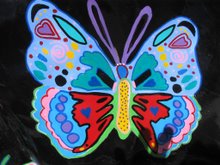
For the quiz: I have posted photos of four butterflies and moths. To win a prize, look carefully at each photo and tell me if it is a photo of a butterfly or a moth. I will give you a hint: there is at least one of each, and here is a reminder of the differences between the two: moths are usually fuzzier, when they land they usually lay their wings flat, and they have straight antennas. Butterflies usually (not always) have clubbed antenna, when they land they hold their wings up above their bodies, and they usually (but not always) fly during the day while moths usually (but again not always) fly during the night. Be sure to label your answers like this: A. Moth B. Butterfly C. Moth (all of these answers are made up).
6:30 am: wake up, shower, get dressed, tidy up room
7:30 am: breakfast of hard boiled 2 duck eggs and a baguette (this is a small loaf of French bread), tea or coffee
9:30 am: Walk a transect. My reading students might remember that a transect is an area of land that is marked on a chart. In each transect there are regions—usually 9. We walk the transect very slowly and look for butterflies. Mostly we see these white butterflies that have black spots. They are very common here and in the United States. We call them cabbage butterflies because they eat cabbage plants. I bet you’ve seen them around!
1:30 pm: Lunch. Lunch is a large meal in Vietnam, much larger than breakfast and about the same size as dinner. There are two of us who do not eat meat so luckily there are lots of things for us to eat, which include boiled cabbage, chayote, eggplant, and French Fries. They do not seem to have drinks of any sort with their meals—no water, pop, or milk (actually I have not seen any milk since I’ve been in Vietnam).
2:30 pm: walk a different transect.
5:00 pm: rest (sometimes I sleep, sometimes I read—I have been reading The Thief Lord in preparation for book club).
6:30: dinner. Many different dishes, always rice is served second to last (not with the meal). Fruit (like bananas, mangoes or a wonderful fruit called dragon fruit) is served at the very end. This is our only dessert. No cookies, cakes, or ice cream.
7:30: walk to computer/internet café and wait, wait, wait for pages to load. Sometimes it takes me two hours to post one passage like this one. No joke!
10:30 pm: read and bedtime.
For the quiz: I have posted photos of four butterflies and moths. To win a prize, look carefully at each photo and tell me if it is a photo of a butterfly or a moth. I will give you a hint: there is at least one of each, and here is a reminder of the differences between the two: moths are usually fuzzier, when they land they usually lay their wings flat, and they have straight antennas. Butterflies usually (not always) have clubbed antenna, when they land they hold their wings up above their bodies, and they usually (but not always) fly during the day while moths usually (but again not always) fly during the night. Be sure to label your answers like this: A. Moth B. Butterfly C. Moth (all of these answers are made up).
Monday, May 14, 2007
Learning about Vietnam: Schools in Vietnam
The day I explored Hanoi was a Saturday, so most schools in the area were closed. However, one was full of children. The normal school week is Monday through Friday, so I wondered why one school would be in session while others were not.
It turns out that some schools are so overcrowded that they have to go to school on Saturdays. This is especially true in the large cities.
The assistant researcher whom I’m working with, Viet, is a teacher so I asked him many questions about Vietnam’s schools. I thought you might enjoy some of these facts:
It is required that all children go to school up until grade 9. If they want to continue to go to school after grade 9 (age 14 and 15) their parents have to pay for it.- Elementary students go to school from 7 am to 10 am. School ends, and most students go home for lunch, rest, play or work. They have to return to school the same day from 1:30-4:30 pm.
- In the country schools (rural—remember that word from earlier in the year), students go home for lunch—all children do (and they have to walk or parents have to pick them up—there are no busses). Lunch is not offered.
- In the city schools lunch is offered but if your family cannot afford to pay for your lunch you have to go home. There is no money to help poor families.
- Elementary teachers have classes of 30 to 40 students.
If a child misbehaves the teacher can strike him/her on the cheek, hit him/her with a ruler, or pinch the child’s ear. This is legal, normal, and expected.
So here are today’s questions. Pick one to copy, paste, and answer. Don’t forget your name.
1. Do you think that there are fewer behavior problems in Vietnamese schools than compared to United States schools, because of how teachers can punish students? Explain your answer.
2. In United States public schools, poor children can get free or cheaper school lunches. The taxes your parents pay help pay for this program. But in Vietnam poor kids go home for lunch. Which system do you think is better? Do you think it is fair that the taxes your parents have to pay go toward paying for poor kids’ lunches? Explain your answer.
3. In the United States, schooling is free until grade 12, when you hopefully graduate and get your high school diploma. What if we had a system like Vietnam’s, where only up until grade 9 is it free. How would this change our world? How would things be different in the United States? Explain your answer.
I can’t wait to read what you write. Today I had duck eggs for breakfast!
Subscribe to:
Posts (Atom)
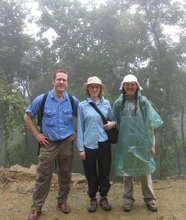
Three Teachers--Jeff, Rachel and Beth
Red and Yellow
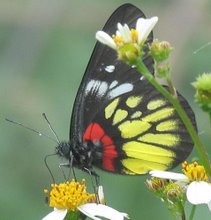
This one is beautiful and also quite common
Rare Green Butterfly
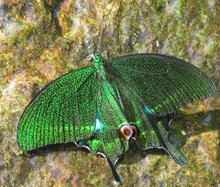
This one is drinking water from a waterfall we hiked to
Tam Dao Classroom

Yes, this is an actual classroom being used
Rachel at a Classroom Teacher's Desk in Tam Dao Primary and Secondary School
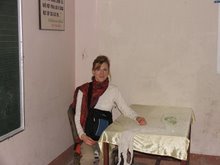
Yes, this is an actual teacher desk
Tam Dao was once a summer retreat for wealthy French families when France occupied Vietnam
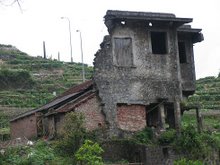
This is what's left of one French villa--there were over 400 here at one time, but were destroyed by the Vietnamese people in the 1950s